When I look at my plants I feel a sense of pride knowing that I am doing my part in trying to beautify the environment.
Tuesday, June 22, 2010
Personal Reflection # 6
When I look at my plants I feel a sense of pride knowing that I am doing my part in trying to beautify the environment.
Independent Service-Learning Field Trip (Calusa Nature Center and Planetarium)
On Sunday June 20th, I did my Independent Service-Learning Field Trip at Calusa Nature Center and Planetarium. The trip went well, however, I was hoping there was more to see. The sun was very hot which made it uncomfortable to be out door. I saw many children and their parents touring the facility for Father’s Day.
The Calusa Nature Center specializes in caring for injured or abandoned animals and nurturing them back to good health. The center has 105 protected acres of land on which you will find the Iona house. In this facility is their museum with
exhibits on display and also a gift shop. To the right of this building is a planetarium where you will see binoculars and telescopes on display. Here they also have a theatre where they show movies about space science and mammals.
While outdoors I saw a butterfly aviary with beautiful butterflies and a bird aviary where they care for disabled birds which are unable to survive in the wild because of their injury. I also saw some wildlife such as alligator, bobcat, raccoon, skunks and they also have snakes on display. They have nature trails which takes you through the cypress wetlands, pine flatwoods and a restoration area.
The center has live educational shows where you can learn about their animals and also get to pet some of them. They also offer guided tours along the trails where you can learn about the plants and animals that live in our area.
I got to see one of their shows called “Meet the Mammals,” in which the Director of Wildlife feed the animals, and give us a history on them. This was then followed by a question and answer session. The children took advantage of his opportunity as their inquiring minds wanted to know so much. We were also given the opportunity to hold or pet some of the animals. I found this to be an interesting experience and I could see how excited some of the children were, they could hardly wait their turn.
I also had the opportunity to personally meet and interview the Executive Director, Jennifer Clearly and the Wildlife Director, Ruth Welburn. They were both excited that I chose their facility for my service-learning field trip.This field trip was an interesting experience, however, I am sure the children had more fun as they were happily running around and did not seem to mind how hot it was outside.
Sunday, June 20, 2010
Field trip # 3 Marine System
Today June 20th I did my Marine Field trip at Lovers Key Park. It was a fun trip but the sun was extremely hot which made it a bit uncomfortable. However, the beach was beautiful and I learnt some very interesting things. Lovers Key Park is 1616 acres with 2.5 miles of white sandy beaches on the Gulf of Mexico. There are many recreational activities such as wildlife viewing, fishing, kayaking, swimming boating and cycling. The park is open from 8 am to sunset 365 days a year. There is a tram system available for convenient access to the beach. Some of the animals that can be seen here are Bald Eagles, Osprey, Snowy Egrets, Manatees, Dolphins, Alligators, Turtles, Pelicans, Sea Gulls, Herons and Ibis. During my trip I saw some sea Gulls and Pelicans. Some of the dominant plants in the park are poison ivy and sea grapes. For our safety the state prohibits us from feeding the animals. This area comprises of an estuary which is a semi-enclosed body of fresh water from inland wetlands that mixes with salt water from the Gulf of Mexico. The beach facilities are all solar powered and the park features the latest design of environmentally friendly restroom facilities. These are waterless toliets that utilize a composition system. After I left the beach I started walking the Black Island Trail however, this soon came to a quick ending as I was attacked by mosquitoes and bitten all over. At this point I decided to end the field trip. Overall, it was a fun day. Pictures of my trip are posted below.

Park Entrance
Inside the Park
On the bridge looking at birds catching fish in water
View of the area from the bridge
Saturday, June 19, 2010
Opinion Paper # 2 - Sustainability in Early Childhood Education
Sustainability for the future needs to be promoted through education, with greater emphasis being placed on early childhood education. Children should be taught and encouraged to practice sustainability through their values, attitudes, habits and life styles. Schools should do more to educate students about sustainability. However, we cannot expect schools to solely shoulder the responsibility of educating students about sustainability. Everyone must play their part in this process, including families, friends and role models by educating children about sustainability from an early age.
There is a popular phrase that says “Children Live What They Learn.” If children learn about sustainability from an early age, it is easier living it throughout their lives. The best way to learn about sustainability is through education, which should first be taught by family, friends and role models at home and in the community, as these places are usually where children imitate others behavior and begin their learning process. If children are educated from home about the 7Rs, which are reduce, reuse, recycle, respect, reflect, repair and responsibility, it will be much easier incorporating it into their education when they start school.
Early childhood education in schools plays a major role in preparing children for a sustainable future. Most schools place greater emphasis on education as children get older and sometimes neglect early childhood education. Research shows that children are more susceptible to learning during the early stages of their lives; therefore schools should be implementing curriculums that entail sustainable education. This is a great way to re-iterate the need for sustainability. By learning at home and then at school, children would better adapt to practicing sustainability for the future.
Children should be regarded as agents of change for sustainability. In the early stages of their lives, children’s inquiring minds are very active. This is the time to get them involved with questions and exercises regarding sustainable development. Teachers can play an instrumental role in this process by introducing and carefully guiding them through these projects to stimulate their minds. They would become fascinated with the outcomes and be eager to practice these sustainable activities. This would help them develop greater attitudes towards the environment. They would feel better about themselves, knowing that they helped to regenerate nature.
The idea that children should be given ample opportunities to be challenged, to make mistakes, and to enjoy seeking possible answers, will better equip them to confront complex questions raised by sustainable development, could have serious consequences and implications. We cannot leave children to learn about sustainability by exploring on their own and learning from their mistakes. These mistakes could be damaging to our environment. If they find these challenges enjoyable they may continue to do so while destroying our sustainable future.
I believe sustainable education should be taught at early childhood in homes, schools and communities. Children should be guided through this process instead of learning through self exploration. Policy makers need to implement sustainability into the education curriculum. These practices will help guide us towards a sustainable future.
Works Cited
Samuelsson, Ingrid Pramling and Kaga, Yoshie. “Early Childhood Education to transform Cultures for Sustainability.” 2010 State of the World: Transforming Cultures. Ed. Linda Starke & Lisa Mastny. New York: Norton & Co. 2010. 57-61. Print
There is a popular phrase that says “Children Live What They Learn.” If children learn about sustainability from an early age, it is easier living it throughout their lives. The best way to learn about sustainability is through education, which should first be taught by family, friends and role models at home and in the community, as these places are usually where children imitate others behavior and begin their learning process. If children are educated from home about the 7Rs, which are reduce, reuse, recycle, respect, reflect, repair and responsibility, it will be much easier incorporating it into their education when they start school.
Early childhood education in schools plays a major role in preparing children for a sustainable future. Most schools place greater emphasis on education as children get older and sometimes neglect early childhood education. Research shows that children are more susceptible to learning during the early stages of their lives; therefore schools should be implementing curriculums that entail sustainable education. This is a great way to re-iterate the need for sustainability. By learning at home and then at school, children would better adapt to practicing sustainability for the future.
Children should be regarded as agents of change for sustainability. In the early stages of their lives, children’s inquiring minds are very active. This is the time to get them involved with questions and exercises regarding sustainable development. Teachers can play an instrumental role in this process by introducing and carefully guiding them through these projects to stimulate their minds. They would become fascinated with the outcomes and be eager to practice these sustainable activities. This would help them develop greater attitudes towards the environment. They would feel better about themselves, knowing that they helped to regenerate nature.
The idea that children should be given ample opportunities to be challenged, to make mistakes, and to enjoy seeking possible answers, will better equip them to confront complex questions raised by sustainable development, could have serious consequences and implications. We cannot leave children to learn about sustainability by exploring on their own and learning from their mistakes. These mistakes could be damaging to our environment. If they find these challenges enjoyable they may continue to do so while destroying our sustainable future.
I believe sustainable education should be taught at early childhood in homes, schools and communities. Children should be guided through this process instead of learning through self exploration. Policy makers need to implement sustainability into the education curriculum. These practices will help guide us towards a sustainable future.
Works Cited
Samuelsson, Ingrid Pramling and Kaga, Yoshie. “Early Childhood Education to transform Cultures for Sustainability.” 2010 State of the World: Transforming Cultures. Ed. Linda Starke & Lisa Mastny. New York: Norton & Co. 2010. 57-61. Print
Monday, June 14, 2010
Personal Reflection # 5
This was a busy week for me as I had lots of school work to complete.
However amids all these hectic things it was wonderful to go outside, relax and enjoy nature. I layed in the sun for a while and tried to alleviate my mind from the stressful day I was having. After a while I felt refreshed and was able to start doing the finishing touches to my Paper # 2 Assignment.

However amids all these hectic things it was wonderful to go outside, relax and enjoy nature. I layed in the sun for a while and tried to alleviate my mind from the stressful day I was having. After a while I felt refreshed and was able to start doing the finishing touches to my Paper # 2 Assignment.
Monday, June 7, 2010
Personal Reflection # 4
This week I was on vacation so I went to visit my sister in North Carolina. I had a wonderful time enjoying the outdoors and basking in the beauty of nature. The environment was a pleasure to behold.
The landscape was beautifully maintained.
Me at the front of her house enjoying the scenery of the community.

I am relaxing by the out door fireplace and enjoying the atmosphere.

My sister and I having fun by the pool in her back yard.

I admired how the trees were nicely arranged around the yard. It gave the feeling as if we were surrounded by the forest.
The landscape was beautifully maintained.
Me at the front of her house enjoying the scenery of the community.
I am relaxing by the out door fireplace and enjoying the atmosphere.
My sister and I having fun by the pool in her back yard.
I admired how the trees were nicely arranged around the yard. It gave the feeling as if we were surrounded by the forest.
Thursday, May 27, 2010
Field Trip # 2 - Freshwater
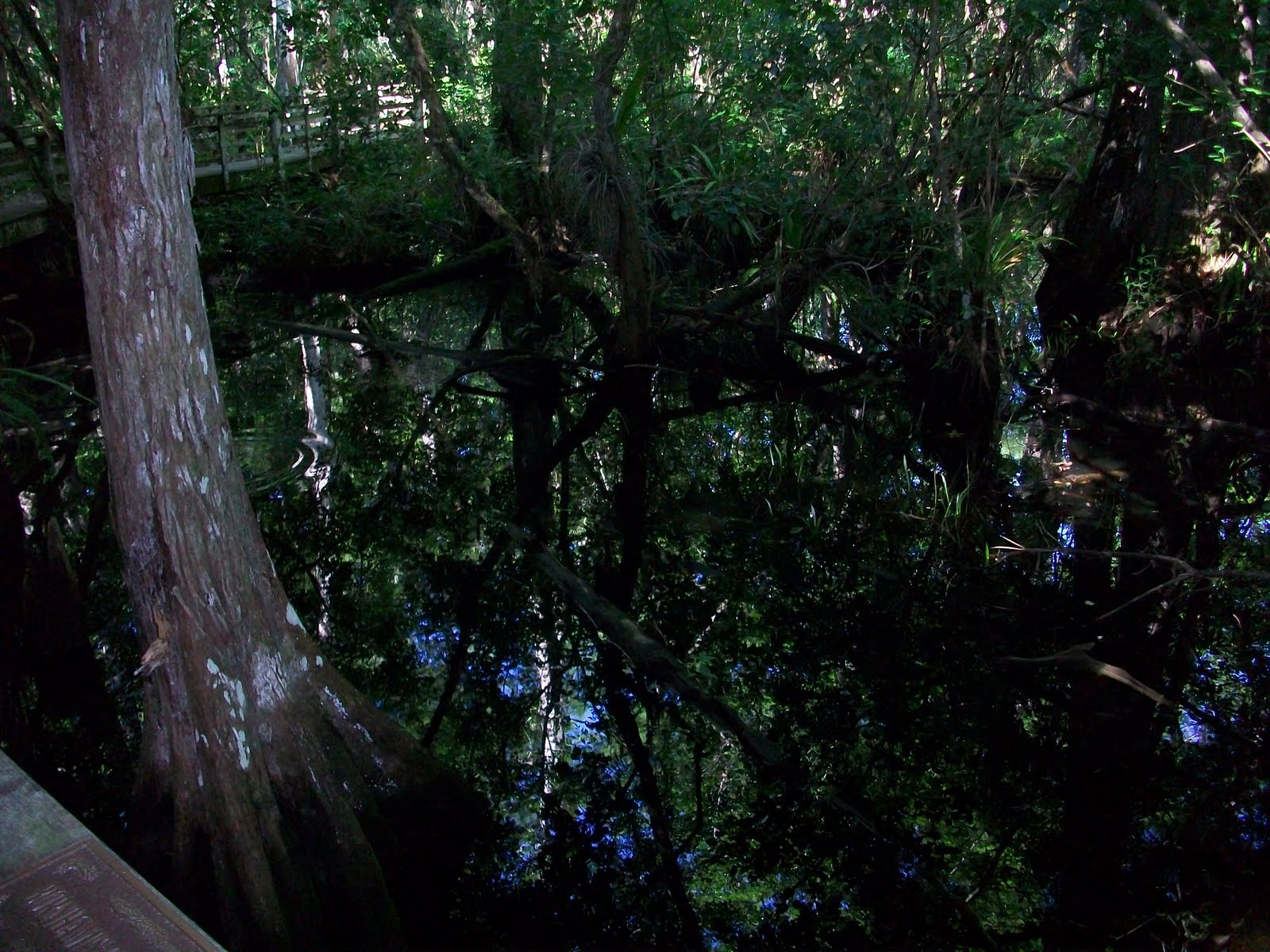
Today, May 27th, I did my Freshwater field trip at the Audobon Corkscrew Swamp Sanctuary. It was a memorable, interesting and adventurous experience. At times it was a bit scary but very enjoyable. I was chased by a bee, there were many bugs biting, but I was in their territory so I adapted well. I am so appreciative of getting this opportunity to enjoy the natural environment. I have posted pictures of the lovely tour.
This is me on the boardwalk having fun and getting ready to experience the great outdoors.

Wetland. I could see many different beautiful birds flying around and some were chirping in the tree.

These are ferns in the wetland.

More wetland. I could hear animals making different noises but I could not see them.

This is the entrance to the Corkscrew Swamp.
This is me on the boardwalk having fun and getting ready to experience the great outdoors.
This is the scenery along the tour.
Wetland. I could see many different beautiful birds flying around and some were chirping in the tree.
These are ferns in the wetland.
More wetland. I could hear animals making different noises but I could not see them.
Still more wetland. I heard something splashing in the water but I could not see what it was.
This was the beautiful scenery at one of the rest stops where I took a few minutes to rest, relax and enjoy nature.
This was more wetlands, many alligators were in this section. They were making loud noises.
This alligator was sunning.
This is a map of the Corkscrew watershed.
The dotted lines shows boundaries as it moves into the landscape. It supports people living in Naples and Bonita Springs and also the Southwest Florida wildlife.
Subscribe to:
Posts (Atom)
